01 / OPEN-SOURCE PROJECT
A generated channel becomes an object the player can carry
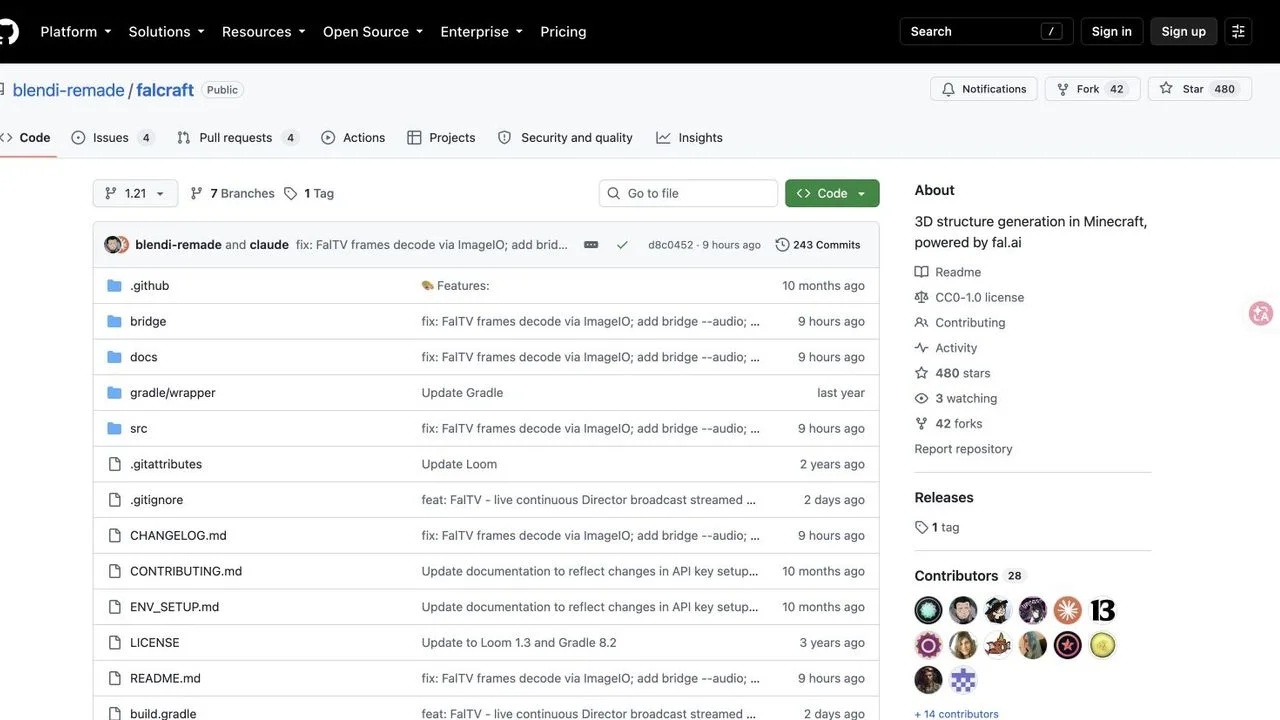
FalTV is one feature inside Falcraft, a broader Minecraft mod for fal-powered 3D structure generation. The feature matters to this directory because it moves live generated video out of a browser player and into a usable object inside a game world.
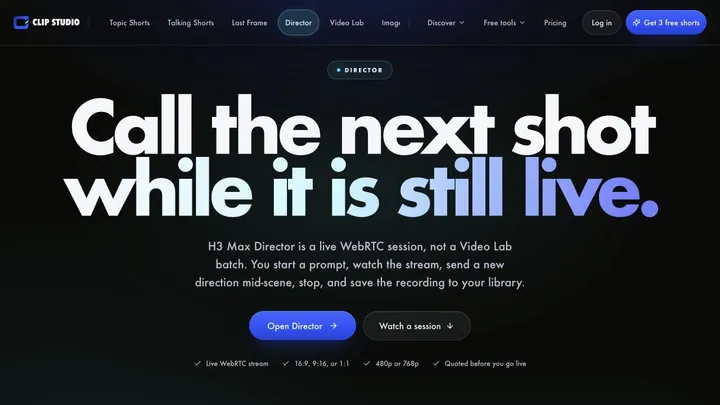
The repository documents an H3 Max Director WebRTC sidecar that supplies the map-item display. Players can steer the broadcast through Minecraft chat, and a local bridge retunes the experience when the provider session approaches its documented duration boundary.
FalTV is not a standalone website. It is a feature inside Falcraft, an experimental Minecraft mod that also explores fal-powered 3D structure generation. The television feature belongs in RetivAI because it embeds live generated video into the game world as a map item, allowing the player to watch without leaving the environment where interaction happens.
The repository documents the full boundary around that idea. A local bridge and headless Chrome receive an H3 Max Director WebRTC session, transform its media for Minecraft, and accept steering through in-game chat. When the finite provider session nears its cap, the bridge retunes. This preserves the television format across connections while avoiding the inaccurate claim that one Director session runs forever.
02 / GAME-TO-WEBRTC BRIDGE
A sidecar keeps browser media concerns outside the Minecraft mod
Minecraft is not a WebRTC browser, so FalTV delegates the live media connection to local web tooling. The sidecar can hold the provider session, decode the ongoing tracks, and supply frames in a form the mod can display. That separation keeps game logic focused on the map item and player actions instead of reimplementing an entire browser media stack inside Java.
Chat becomes the natural control surface because it already belongs to the game. A player can describe a change without opening an external director panel, and the bridge can translate that message into a compact update for the active session. The resulting loop makes generated television feel like part of play rather than an embedded passive video advertisement.
Retuning is both a limitation and an operational pattern. The repository describes sessions of roughly two minutes before rollover. Starting another connection can keep the concept alive, but builders still need to communicate the transition, preserve essential world facts, release the prior session, and prevent hidden parallel usage from increasing cost.
- The reviewed target is Minecraft 1.21.1 with Fabric in single-player mode.
- Local bridge and headless-browser processes are required alongside the mod.
- The operator supplies a fal key and remains responsible for provider spend.
03 / IN-WORLD STEERING LOOP
Minecraft chat retunes what the map-item television shows
The player watches the current Director output on an in-world item, submits a new direction through chat, and sees upcoming content respond through the bridge. Session rollover reconnects the media path when required rather than converting the feature into offline clip playback.
A Minecraft player watches the generated channel on a FalTV map item and uses in-game chat to steer or retune what appears next.
A local bridge opens a Director WebRTC session and converts its ongoing media for the Minecraft display. New chat directions retune the same experience until session rollover requires another connection.
- 01
The FalTV map item acts as an in-world screen rather than opening a separate web player.
- 02
A local sidecar and headless browser receive the Director WebRTC tracks outside the game process.
- 03
Minecraft chat becomes a compact steering surface for the active generated channel.
- 04
The bridge retunes around the documented session cap so the television concept can continue beyond one provider connection.
04 / EXPERIMENTAL LOCAL SETUP
The demo needs a game client, browser sidecar, and paid provider key
FalTV is one feature of a larger mod and is documented for a local single-player setup. Installation complexity, finite sessions, generation spend, game performance, and bridge recovery all matter before treating the idea as a durable multiplayer service.
- FalTV is a feature within a larger experimental mod, not a standalone hosted television service.
- The documented setup is single-player and requires several local components plus paid provider access.
- Director sessions are finite; retuning can continue the format but is not the same as one uninterrupted infinite model session.
05 / CC0 SOURCE REVIEW
The repository confirms both the feature and its integration boundaries
Falcraft's public code and README support the map-item display, Director bridge, chat steering, environment requirements, retuning behavior, and CC0-1.0 license. The fal API reference separately supports the underlying session contract.